Riverbank Collapse at Iford Playing Fields: Causes, Timeline, Risks & Long-Term Solutions
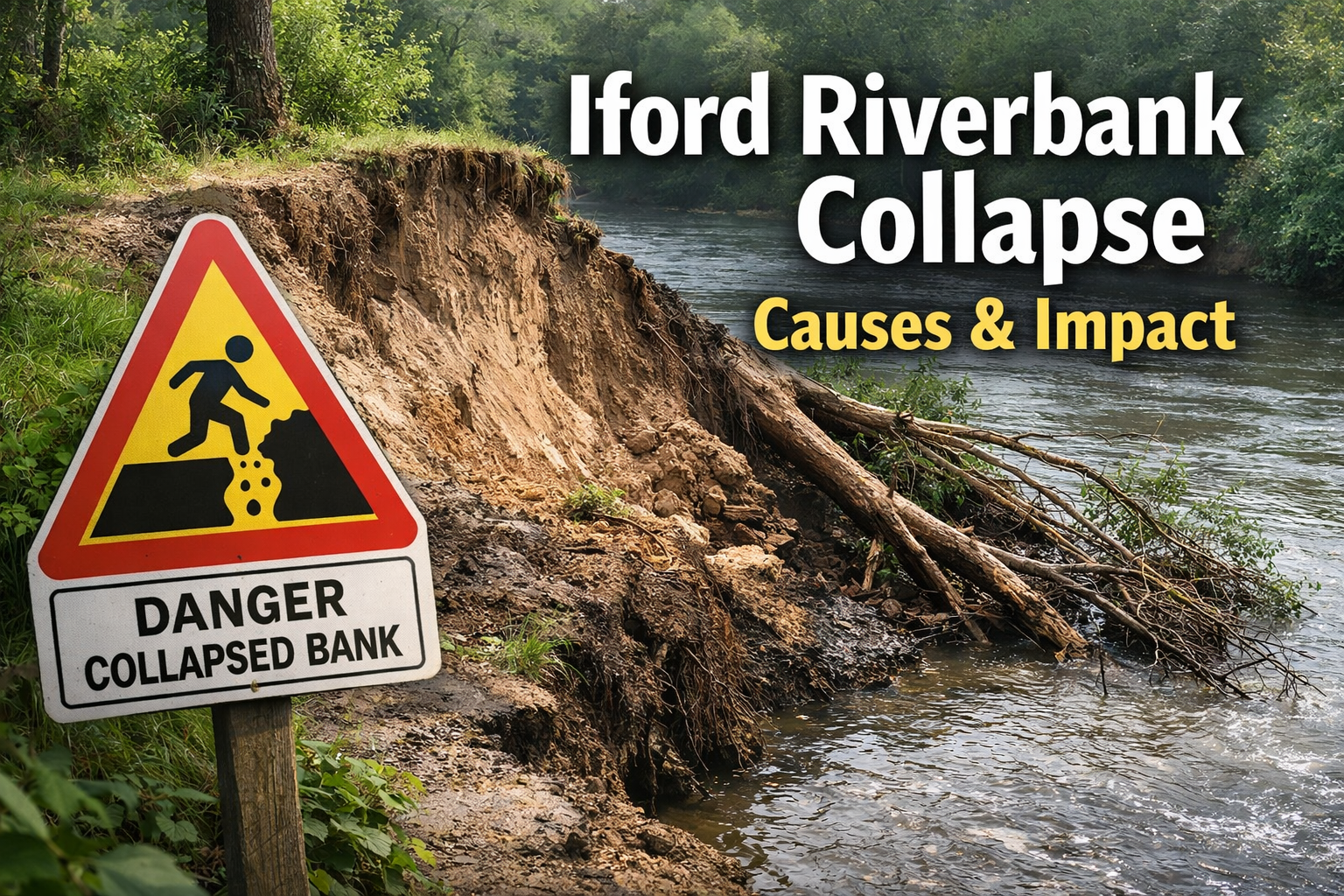
Rivers shape the landscape continually, but when a riverbank fails suddenly, the effects on safety, ecology, and community space can be dramatic. The recent riverbank collapse at Iford Playing Fields has sparked concern among residents, local officials, and environmental experts.
What seemed like a stable riverside edge gave way unexpectedly, leaving behind exposed soil, fallen trees, and questions about prevention, resilience, and ecological stewardship.
This comprehensive article explains what happened, why it occurred, the broader environmental and safety consequences, and what long-term solutions can help prevent future collapses.
Understanding the Setting: Iford Playing Fields and Its Riverbank
Iford Playing Fields lies beside the River Stour near Christchurch, Dorset — a scenic recreational space enjoyed for walking, cycling, and outdoor leisure. Because the area is located on a low-lying floodplain with both river flow and tidal influence, it is naturally susceptible to water-driven erosion and soil instability over time.
Riverbanks like this serve critical functions:
- They stabilize soil and limit sediment entering the water.
- They support riparian vegetation and wildlife habitat.
- They provide safe boundaries between land and water.
- They reduce flood risk by helping shape river flow.
When these natural defenses fail, the consequences extend far beyond one localized collapse.
What Happened at Iford Playing Fields?
On May 29, 2025, local residents first noticed a significant section of riverside land had vanished into the river. Trees that previously stood on solid ground were toppled with roots exposed and trunks partly submerged — a clear sign of a major embankment failure.
The collapse appeared to occur suddenly, transforming the landscape overnight. Residents described familiar scenery changing drastically, with unstable, slumped soil creating steep drop-offs and hidden hazards.
Timeline of Events
Early Signs of Erosion
Often, bank failures begin with subtle indicators:
- Minor soil loss near the edge
- Cracks along the ground surface
- Leaning trees or exposed roots
These precursor signs often go unnoticed until a trigger event leads to rapid failure.
Environmental Triggers
The period preceding the collapse reportedly saw:
- Heavy rainfall
- Strong winds
- Saturated soil conditions
These weather patterns can increase soil weight and reduce its internal strength — setting up conditions where a collapse becomes more likely.
Sudden Collapse
Once the combination of toe erosion (flow cutting at the base), soil saturation, and root system failure reached a tipping point, a large section of the bank slumped into the river.
What Causes a Riverbank Collapse?
Riverbank collapses are rarely due to a single factor. They result from a combination of natural processes and environmental pressures:
1. Hydraulic Erosion and Base Undercutting
Flowing water constantly erodes the bank’s lower layers (the “toe”). This undercutting removes foundational support, eventually weakening the structure above it.
2. Soil Saturation and Heavy Rain
When soil becomes saturated from prolonged rainfall or high water levels, its cohesive strength drops. In this weakened state, the ground cannot support its own weight, leading to slumping or collapse.
3. Vegetation Loss
Trees and deep-rooted shrubs help bind soil particles together. When vegetation is lost due to age, removal, or disturbance, the bank loses a natural stabilizer.
4. Human Activity
Foot traffic, compacted soil from pathways, drainage alterations, and nearby infrastructure can accelerate bank instability. Regular use of river edges in public spaces adds stress to already vulnerable land.
5. Climate Change and Weather Extremes
Changing rainfall patterns, heavier storm events, and unpredictable river levels increase pressure on natural riverbanks, making collapses more frequent and severe.
Immediate Safety Risks After the Collapse
The collapse at Iford Playing Fields created multiple public safety hazards:
- Unstable ground and hidden cavities near the edge
- Risk of falls for walkers, cyclists, and children
- Sudden drop-offs into water
- Obstructed paths and walking routes
Local authorities have cordoned off high-risk zones with signage and barriers while assessing long-term safety needs.
Environmental Impact on River Systems
Sediment Influx and Water Quality
Soil and debris entering the river increase turbidity (cloudiness), which affects aquatic ecosystems by:
- Smothering fish eggs
- Reducing sunlight for aquatic plants
- Clogging gills of invertebrates and fish
These changes can disrupt local biodiversity and reduce habitat health.
Habitat Loss and Vegetation Damage
When vegetation and trees fall into the river, the riparian habitat suffers. This habitat supports birds, insects, and small mammals. Its loss can reduce species richness and ecosystem resilience.
Altered Flow Patterns
Large woody debris and sediment can change river flow paths, potentially increasing erosion elsewhere or forming debris dams that affect water movement.
Community and Recreational Consequences
The collapse has had notable impacts on local life:
- Sections of playing fields and riverside paths have been restricted for safety.
- Recreational uses (walking, sports, picnics) have been disrupted.
- Residents express concerns about future collapses and repair timelines.
Long-Term Solutions: Stabilization and Prevention
To reduce future collapses, communities and authorities can adopt a mix of approaches:
Nature-Based Stabilization Techniques
- Planting native deep-rooted vegetation
- Bioengineering solutions like living coir mats or biodegradable supports
These methods strengthen soil naturally, enhance biodiversity, and improve ecosystem resilience.
Engineering Approaches
When safety is crucial, structural solutions include:
- Riprap / rock armor
- Gabion baskets
- Slope regrading
- Retaining structures
Companies specializing in riverbank protection can assess site-specific needs and recommend appropriate methods.
Monitoring and Early Detection
Regular inspections for soil cracking, root exposure, and undercutting can alert authorities to vulnerability before a collapse occurs.
Lessons Learned from Iford Playing Fields
1. Early Warning Signs Matter
Even minor soil trails, small cracks, or leaning trees can be precursors to collapse. Prompt reporting helps prevent catastrophe.
2. Vegetation Is a Stabilizing Force
Healthy plant roots are one of the most effective natural defenses against erosion.
3. Integrating Natural and Engineered Solutions Works Best
Balancing ecological restoration with targeted reinforcement delivers long-term stability.
Frequently Asked Questions (FAQs)
What triggered the collapse at Iford Playing Fields?
A combination of hydraulic erosion, saturated soil, vegetation loss, and human-induced pressure likely contributed to the failure.
Is the area still safe?
Some zones are accessible but dangerous bank edges remain restricted until assessments and stabilization work are completed.
Can riverbank collapses increase flood risk?
Yes — changes in bank shape can alter flow capacity, potentially affecting flooding behavior downstream.
How frequent are such collapses?
Riverbank failures are common in dynamic river systems, particularly in areas with high rainfall and erosion pressures.
How can future collapses be prevented?
Combining vegetation restoration, engineered protections, drainage management, climate resilience planning, and public monitoring offers the best preventative strategy.
Conclusion
The riverbank collapse at Iford Playing Fields highlights the complex interplay between natural processes, environmental change, and public land use. This event is not just an isolated incident — it is a reminder that river systems are dynamic and that risk management, ecological stewardship, and community awareness must go hand-in-hand.
By understanding the causes, risks, and potential solutions, communities can better protect riverside landscapes, preserve public recreational spaces, and maintain ecological balance for future generations.
Also read more about: What Is TabooTube? Full Platform Overview 2026 , Asbestlint Explained: History, Uses, Risks & Why It Was Banned , Ultimate Guide to Solving “Phil or Lil of Rugrats” Crossword Clues







One thought on “Riverbank Collapse at Iford Playing Fields: Causes, Timeline, Risks & Long-Term Solutions”