EasyJet Flight U2238 Emergency Landing Newcastle—Full Incident Analysis
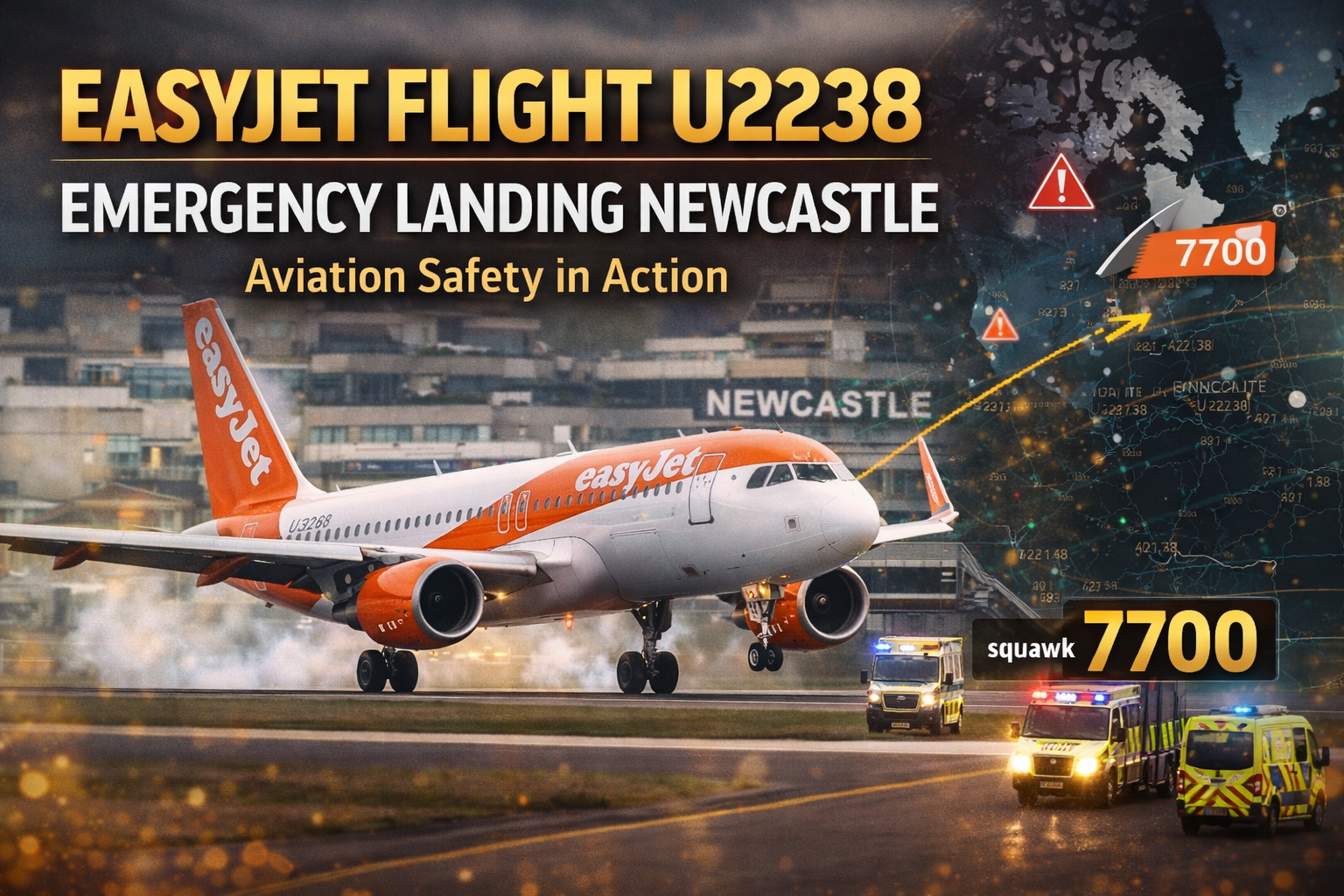
The EasyJet Flight U2238 emergency landing in Newcastle became a widely discussed aviation incident in October 2025. While the term “emergency landing” may sound alarming, the event actually demonstrated how modern aviation safety systems work exactly as designed.
Operated by EasyJet, flight U2238 was traveling from Copenhagen Airport to Manchester Airport when it diverted to Newcastle International Airport due to a medical emergency onboard.
The aircraft involved was an Airbus A320, one of the most widely used and reliable passenger jets in the world. The diversion and landing were executed smoothly, highlighting the professionalism of airline crews and the effectiveness of global aviation safety protocols.
This detailed article explores the full timeline of the incident, explains why the aircraft diverted, and examines how modern aviation systems prioritize passenger safety.
What Happened on EasyJet Flight U2238 Over the UK Skies?
The EasyJet flight emergency at Newcastle Airport occurred during what began as a routine European flight.
Flight U2238 departed Copenhagen normally and climbed to its cruising altitude while heading toward Manchester in the United Kingdom. However, during the journey across European airspace, a passenger experienced a serious medical emergency that required immediate attention.
Once the cabin crew assessed the situation, the flight crew determined that the passenger needed urgent medical assistance on the ground. As a result, the pilots initiated a flight diversion to the nearest suitable airport.
Instead of continuing to Manchester, the aircraft was redirected toward Newcastle, where emergency services could be ready upon arrival.
Why the Aircraft Diverted to Newcastle Instead of Manchester
A common question people ask after incidents like this is: why did the plane land in Newcastle instead of Manchester?
In aviation, pilots follow strict diversion protocols designed to prioritize safety and rapid response.
Key factors that influence diversion decisions include:
- Distance to the nearest airport
- Runway availability
- Air traffic congestion
- Weather conditions
- Emergency medical response capability
In the case of flight U2238, Newcastle International Airport was the closest suitable airport capable of handling the aircraft quickly.
By choosing Newcastle, the crew ensured that medical professionals could reach the affected passenger as soon as possible.
This is standard procedure in aviation emergencies and reflects a proactive safety culture within airlines.
Inside the In-Flight Medical Emergency That Triggered the Landing
Although airlines rarely disclose personal medical details for privacy reasons, reports confirmed that the diversion was caused by a passenger medical emergency.
Commercial aircraft are prepared for such situations with extensive onboard medical resources, including:
- Emergency medical kits
- Oxygen equipment
- Automated External Defibrillators (AEDs)
- Trained cabin crew
Cabin crew members receive specialized training to manage medical incidents during flights. They are taught how to stabilize passengers while pilots coordinate with ground medical services.
In many cases, pilots also consult doctors through ground-based medical advisory services, which assist with decisions about whether a diversion is necessary.
The decision to land early is always based on protecting passenger health.
How Pilots Declare an Emergency: Understanding Code 7700
During the incident, flight tracking services showed that the aircraft transmitted squawk code 7700.
This signal is a universal aviation transponder code used to indicate a general emergency.
When a pilot activates 7700, air traffic control immediately recognizes that the aircraft requires priority handling. This allows controllers to:
- Clear surrounding airspace
- Coordinate emergency services
- Provide direct routing to the nearest airport
Flight tracking platforms such as Flightradar24 later displayed the emergency signal publicly.
Importantly, declaring 7700 does not necessarily mean catastrophic danger. It simply alerts authorities that the aircraft needs assistance or priority.
In the case of flight U2238, the signal ensured a smooth and rapid diversion to Newcastle.
Timeline of the EasyJet Flight U2238 Incident
A simplified timeline helps illustrate how efficiently aviation systems respond to emergencies.
1. Departure from Copenhagen
Flight U2238 departed normally from Copenhagen Airport.
2. Cruise Phase
The aircraft traveled across northern European airspace toward the United Kingdom.
3. Medical Emergency Identified
Cabin crew reported a serious passenger health issue requiring urgent attention.
4. Pilot Declares Emergency
The pilots activated transponder code 7700, notifying air traffic control.
5. Diversion Decision
The aircraft was redirected to Newcastle International Airport.
6. Emergency Landing
The plane landed safely, where medical teams were already prepared.
7. Passenger Assistance
Emergency responders boarded the aircraft to assist the affected traveler.
8. Flight Continuation
After handling the situation, the aircraft later continued its journey to Manchester Airport.
How Airlines Prioritize Passenger Safety During Critical Moments
Events like the EasyJet flight U2238 emergency landing demonstrate how airlines prioritize safety above schedule or operational convenience.
Modern aviation safety relies on multiple layers:
- Pilot training programs
- Aircraft safety technology
- Air traffic control coordination
- Emergency response planning
- Regulatory oversight
Commercial aviation is widely considered one of the safest forms of transportation globally, largely because these systems operate simultaneously.
When unexpected events occur, the aviation industry responds through structured procedures that have been refined over decades.
What Happens After an Emergency Landing at a UK Airport
Once an aircraft performs an emergency landing in the United Kingdom, several post-landing procedures begin immediately.
At airports such as Newcastle International Airport, emergency response teams are already positioned near the runway.
After landing:
- Medical personnel assess the passenger.
- Emergency vehicles escort the aircraft if necessary.
- Airline staff assist remaining passengers.
- Maintenance teams inspect the aircraft.
If the emergency was medical rather than mechanical, the aircraft can often resume operations after brief checks and crew coordination.
Aviation Authority Oversight and Safety Regulation
Aviation incidents in the UK are closely monitored by regulatory authorities.
Two key organizations play important roles:
- Civil Aviation Authority – responsible for airline safety regulation and operational oversight.
- Air Accidents Investigation Branch – investigates serious aviation incidents.
In the case of medical diversions like flight U2238, formal investigations are rarely required unless a mechanical or operational issue is suspected.
Still, airlines report such events to maintain transparency and safety tracking.
What This Incident Reveals About Modern Airline Safety
The EasyJet Airbus A320 incident was not a mechanical failure or accident.
Instead, it showed how aviation professionals respond to unexpected situations with calm efficiency.
Modern aircraft like the Airbus A320 include advanced navigation systems, redundant safety features, and strict operational checklists.
Combined with rigorous pilot training, these technologies allow crews to manage emergencies safely.
Lessons for Travelers: Understanding Flight Diversions
For passengers, hearing about an emergency landing can be concerning. However, most diversions are precautionary safety measures rather than dangerous situations.
Key things travelers should remember:
- Diversions are proactive safety decisions.
- Aircraft crews are highly trained for emergencies.
- Airports maintain rapid response teams.
- Passenger health and safety always come first.
The EasyJet Flight U2238 emergency landing in Newcastle ultimately demonstrates how well aviation safety systems function under pressure.
FAQs
Why did EasyJet flight U2238 make an emergency landing?
The aircraft diverted due to a passenger experiencing a serious in-flight medical emergency.
Was there a technical problem with the plane?
No mechanical problem was reported with the Airbus A320.
What does squawk code 7700 mean?
It is a universal aviation signal indicating a general emergency requiring priority handling.
Did the flight continue to Manchester afterward?
Yes. After medical assistance and ground procedures were completed, the flight later continued to Manchester Airport.
Who regulates aviation safety in the UK?
Safety oversight is handled by the Civil Aviation Authority.
Final Thoughts
The EasyJet Flight U2238 emergency landing in Newcastle ultimately tells a reassuring story about aviation safety.
From the pilots’ rapid decision-making to air traffic control coordination and airport emergency response, every step followed established protocols designed to protect passengers.
Rather than signaling danger, the event highlights the strength of modern aviation systems—systems built to respond instantly when human health or safety is at risk.
And that reliability is exactly why air travel remains one of the safest ways to journey across the world.
Also read more about: Fecife: The Rise of a Digital Concept in an Era of Platform Identity and Muštarda: Origins, Flavor Profile, Culinary Uses & Global Popularity Guide