Muštarda: Origins, Flavor Profile, Culinary Uses & Global Popularity Guide
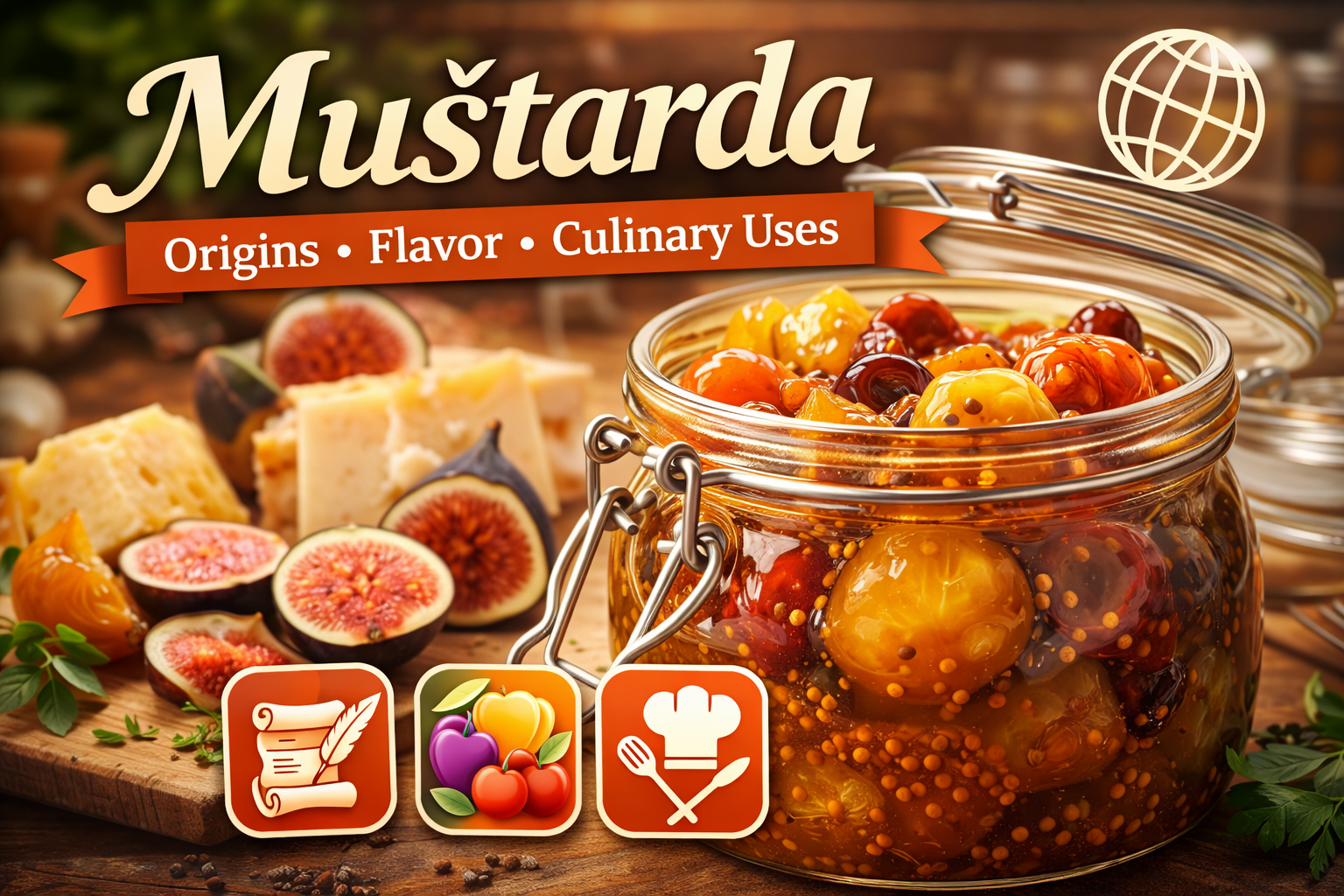
Muštarda (often known in Italy as mostarda) is a distinctive sweet-spicy fruit condiment that blends preserved fruit with mustard essence. Although the name resembles “mustard,” muštarda is far more complex than the everyday yellow spread. It is a preserve-like preparation combining candied fruits, sugar syrup, vinegar, and mustard oil or seeds to create a layered, aromatic flavor profile.
Historically associated with festive tables in parts of Europe, muštarda is now experiencing renewed global interest. As chefs and home cooks rediscover heritage condiments, muštarda stands out for its ability to deliver sweetness, heat, acidity, and aroma in a single spoonful.
The Historical Origins of Muštarda
The roots of muštarda trace back to medieval Europe, particularly northern Italy and surrounding trade-influenced regions. The name derives from the Latin mustum (grape must) and references mustard seed, reflecting early combinations of grape reduction and crushed mustard.
One of the most recognized regional traditions is Cremona, where fruit-based mostarda became a celebrated specialty. During the Renaissance period, preserved fruits infused with mustard syrup were considered luxurious additions to noble feasts.
Trade routes connecting Europe with Asia introduced spices, sugar, and preservation techniques. These influences helped shape muštarda into a condiment that balanced sweetness and pungency — a practical and flavorful solution in eras before refrigeration.
Regional Variations of Muštarda
Muštarda is not a standardized product; it varies significantly by region:
1. Italian Mostarda
- Often includes whole candied fruits (pear, cherry, quince, fig)
- Infused with strong mustard essence
- Served alongside boiled meats (bollito misto) and cheeses
2. Central European Variants
- May resemble thick mustard sauces
- Less fruit-forward, more sauce-like
- Used with sausages and roasted meats
3. Grape-Based Preparations
Some early versions incorporated reduced grape must, creating a darker, wine-toned condiment with subtle tannic depth.
Despite differences, the defining characteristic remains the interplay of sweet fruit and mustard heat.
The Flavor Profile of Muštarda
Muštarda delivers a multi-layered sensory experience:
- Initial Taste: Sweet and aromatic from candied fruit or syrup
- Mid-Palate: Gentle acidity from vinegar or grape must
- Finish: A sharp, warming mustard heat that lingers
Unlike standard mustard, muštarda is not aggressively sour. Instead, it offers rounded complexity. Depending on the fruit used, you may detect notes of pear blossom, citrus zest, dried fig richness, or cherry brightness.
This balance makes muštarda ideal for cutting through fatty meats and enhancing aged cheeses without overpowering them.
Ingredients Commonly Used in Muštarda
Traditional recipes typically include:
- Mustard seeds or mustard oil
- Sugar or honey
- Vinegar or grape must
- Firm fruits (pears, apples, cherries, quinces, figs, apricots)
- Optional spices (cloves, cinnamon, black pepper)
The fruit must retain structure after cooking. The syrup is infused with mustard essence, which provides heat without excessive bitterness.
How Muštarda Is Traditionally Prepared
- Fruit Preparation—Fruit is peeled and cut (or kept whole if small).
- Candying Process – Fruit is simmered in sugar syrup.
- Mustard Infusion—Mustard oil or crushed seeds are incorporated.
- Resting Period – The mixture rests for days to allow flavor integration.
- Jar Storage—Stored in sterilized glass jars.
The slow infusion process is critical. It ensures the mustard heat permeates the fruit evenly, creating depth rather than surface sharpness.
Culinary Uses of Muštarda in Savory Dishes
Muštarda’s versatility makes it valuable in both traditional and modern kitchens.
Classic Pairings
- Roasted pork loin
- Beef brisket
- Poultry dishes
- Aged cheeses (Parmigiano-Reggiano, pecorino)
Functional Uses
- Glaze for roasted meats
- Sandwich spread
- Marinade component
- Charcuterie board accent
Its sweetness balances salt and fat, while mustard heat adds aromatic contrast.
Muštarda in Modern Fusion Cuisine
Contemporary chefs incorporate muštarda into:
- Gourmet burgers
- Seafood sauces
- Vinaigrettes
- Grilled vegetable dishes
In fusion cuisine, it may be blended into reduction sauces or paired with Asian-inspired dishes for a sweet-spicy counterpoint.
Health and Nutritional Considerations
Muštarda contains sugar due to its preserved fruit base, but mustard seeds provide certain beneficial compounds:
- Natural antioxidants
- Trace minerals (selenium, magnesium)
- Low calorie density in small servings
Because its flavor is intense, only small amounts are typically needed. When consumed in moderation, muštarda can complement a balanced diet.
Muštarda Compared to Traditional Mustard
| Feature | Traditional Mustard | Muštarda |
|---|---|---|
| Base | Ground mustard seeds | Fruit preserve + mustard |
| Texture | Smooth paste | Syrupy with fruit pieces |
| Flavor | Tangy, sharp | Sweet, aromatic, spicy |
| Usage | Condiment | Condiment + accompaniment |
Muštarda functions as a preserve-enhanced condiment rather than a simple mustard spread.
Storage and Shelf Life
- Store in airtight glass containers
- Refrigerate after opening
- Shelf life: Several months due to sugar and vinegar preservation
- Always check aroma and texture before use
Proper storage preserves both flavor intensity and fruit integrity.
Cultural Significance of Muštarda
In many Italian households, especially in regions like Lombardy, muštarda is associated with holidays and celebratory meals. It symbolizes culinary craftsmanship and preservation tradition.
Its presence on festive tables reflects resourcefulness — transforming seasonal fruit into a long-lasting delicacy.
The Rising Global Popularity of Muštarda
The modern food movement emphasizes:
- Artisanal production
- Heritage recipes
- Small-batch condiments
- Flavor complexity
Muštarda aligns perfectly with these trends. Food enthusiasts seeking distinctive sweet-spicy condiments are rediscovering this traditional preparation. Specialty food markets and gourmet restaurants increasingly feature it on curated menus.
Tips for Incorporating Muštarda at Home
- Add a spoonful to roasted chicken pan juices
- Pair with sharp cheddar or aged Parmesan
- Mix into salad dressing for depth
- Use as a glaze for grilled pork
- Spread lightly on artisan sandwiches
Start small — its flavor is concentrated and impactful.
Why Muštarda Deserves a Place in Modern Kitchens
Muštarda bridges culinary history and contemporary experimentation. Its balanced profile makes it adaptable across cuisines, from rustic European meals to innovative fusion dishes.
As interest in heritage condiments grows, muštarda offers a compelling alternative to standard mustard — delivering sweetness, spice, and aromatic depth in one preparation.
Final Thoughts on Muštarda
Muštarda represents a centuries-old tradition that remains highly relevant today. From medieval preservation techniques to modern gastronomy, it has evolved while maintaining its essential character.
Whether served alongside roasted meats, paired with aged cheeses, or incorporated into modern sauces, muštarda delivers complexity and cultural depth. Its resurgence signals a broader appreciation for time-honored ingredients that continue to enrich contemporary cooking.
Frequently Asked Questions (FAQs)
What does muštarda represent in digital culture?
Muštarda represents a conceptual digital ecosystem focused on identity-driven content, structured engagement, and sustainable community development rather than short-term virality.
Is muštarda a platform or a philosophy?
It functions as both. It can be understood as a framework for building digital platforms while also representing a broader philosophy of storytelling, creator positioning, and digital identity clarity.
How is muštarda different from traditional social media?
Unlike traditional platforms that prioritize rapid growth, algorithmic reach, and viral metrics, muštarda emphasizes coherent branding, transparent engagement models, and long-term audience relationships built on trust.
Why are concept-based ecosystems gaining popularity?
They align with modern user expectations for authenticity, transparency, and community-driven interaction. Audiences increasingly prefer meaningful digital spaces over attention-driven environments.
Is muštarda connected to food or digital culture?
While muštarda traditionally refers to a European fruit-mustard condiment, in digital discourse it has evolved into a metaphorical framework representing structured, layered digital ecosystems.
What problem does muštarda solve in online branding?
Muštarda addresses fragmentation in digital identity. It encourages creators and brands to build cohesive narratives instead of chasing isolated trends across multiple platforms.
Can businesses apply the muštarda framework?
Yes. Businesses can use the muštarda model to create consistent messaging, structured content systems, and long-term brand equity rather than relying solely on short-term promotional tactics.
Is muštarda suitable for individual creators?
Absolutely. Independent creators benefit from muštarda principles by developing a clear niche, defined audience positioning, and sustainable content strategy.
Does muštarda rely on algorithms?
No. While it operates within digital ecosystems that use algorithms, the core philosophy prioritizes community value and identity alignment over algorithm manipulation.
How does muštarda support long-term growth?
By focusing on brand clarity, intentional audience building, and value-driven interaction, muštarda fosters sustainable digital expansion rather than unpredictable viral spikes.
Is muštarda a trend or a long-term shift?
It reflects a broader shift toward authenticity, decentralized identity, and community-centric digital architecture — suggesting it is part of a long-term transformation in online engagement models.
How can someone start implementing muštarda principles?
Start by defining your core identity, clarifying your audience, building structured content pillars, and focusing on consistent, meaningful interaction rather than rapid expansion.
Also read more about: Mannacote Hidden Secrets: The Complete Italian Stuffed Pasta Guide and Pravi Celer: Complete Guide to Health Benefits, Nutrition & Culinary Uses also Joguart: The Complete Guide to This Probiotic-Rich Functional Yogurt






2 thoughts on “Muštarda: Origins, Flavor Profile, Culinary Uses & Global Popularity Guide”